Classic Mac adventure games
The Macintosh arrived in 1984 at the height of the text adventure, and for a few years adventure games were a large part of what there was to do on one. This page collects the ones that still run here: the Infocom catalogue, the illustrated parser games that tried to take Infocom on, and a handful of stranger experiments that did not fit either description.
Infocom, and why it was on the Mac from day one
Infocom did not write its games for any particular computer. It wrote them for the Z-machine, an imaginary computer of its own design, and then wrote a small interpreter for each real machine. Porting a catalogue to a new platform meant writing one interpreter, which is why Infocom titles were on the Macintosh almost as soon as the Macintosh was on sale. They boot here from original Infocom floppies, the same way they did then.
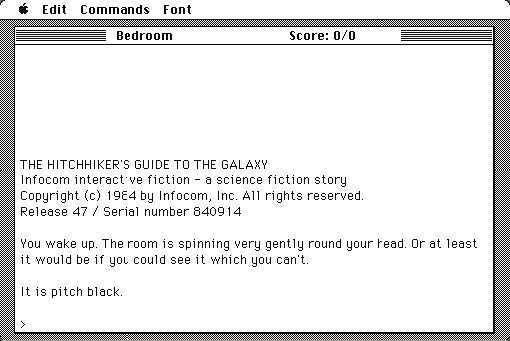
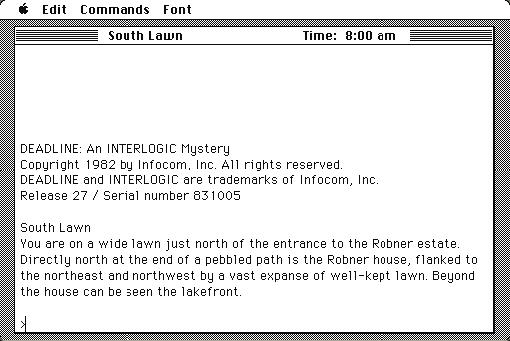
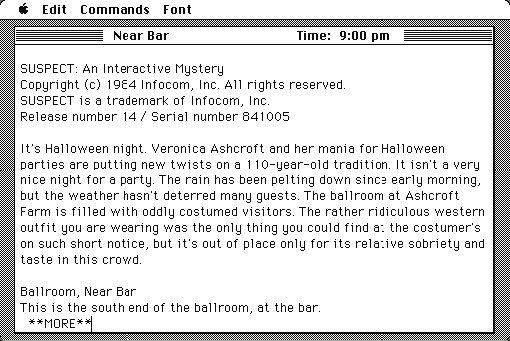
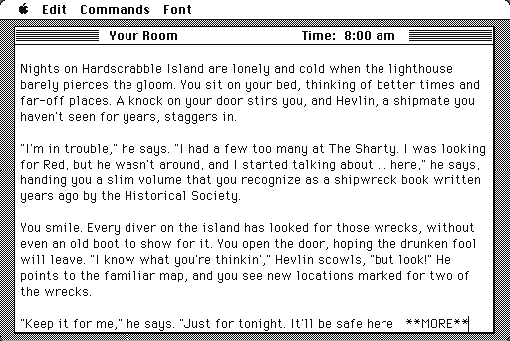
What is here covers most of the company's range. The Hitchhiker's Guide to the Galaxy, written by Douglas Adams with Steve Meretzky, is the famous one and deserves to be: it is funny, and it is also unfair to the player on purpose, in ways that are part of the joke. Deadline was Infocom's first mystery, sold in a police dossier with interview transcripts and lab reports, and gives you twelve hours of game time to solve a murder. The Witness and Suspect followed it. Wishbringer was written as the introduction for newcomers and is the right one to start with. Seastalker was aimed at younger players. Infidel makes you play someone thoroughly unpleasant and then holds you to it. Cutthroats is a shipwreck-diving caper among people you should not trust.
The parser games with pictures
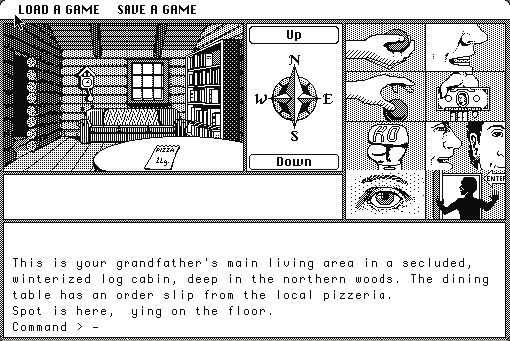
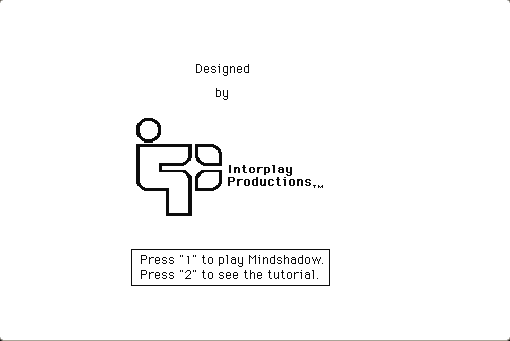
The Macintosh had a screen that could show pictures and a mouse, and a number of publishers bet that adventure games should use both. The most interesting of them came from a young Interplay, published by Activision. Mindshadow starts you on a beach with no memory. Borrowed Time is hard-boiled detective fiction in which you are the target of the murder. Tass Times in Tonetown is a surreal, punkish town that makes more sense once you stop expecting it to. All three keep a text parser and put a picture above it, and the later two add verbs you can click — an early Macintosh answer to how an adventure game should look.
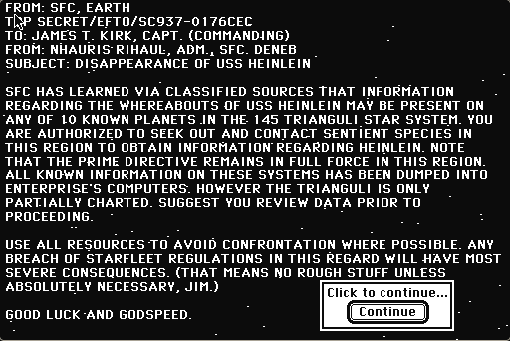
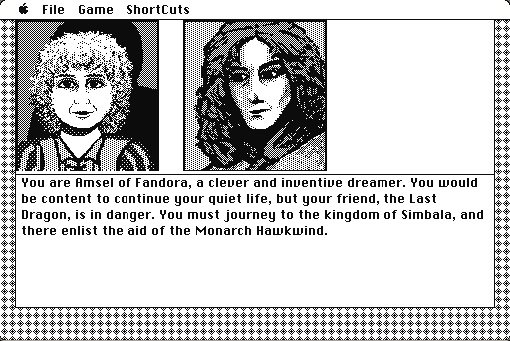
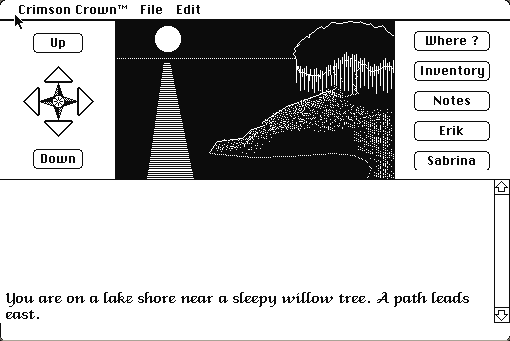
Around them sit The Crimson Crown, Penguin Software's sequel to Transylvania; Dragonworld, adapted from a fantasy novel; and Star Trek: The Kobayashi Alternative, which gives you the Enterprise and a missing ship and leaves the rest to you.
The ones that fit no category
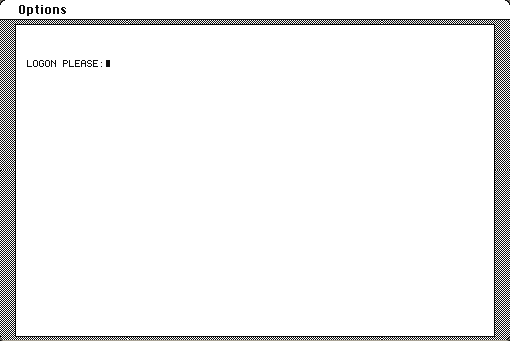
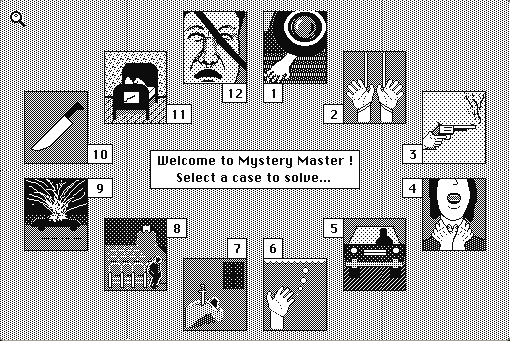
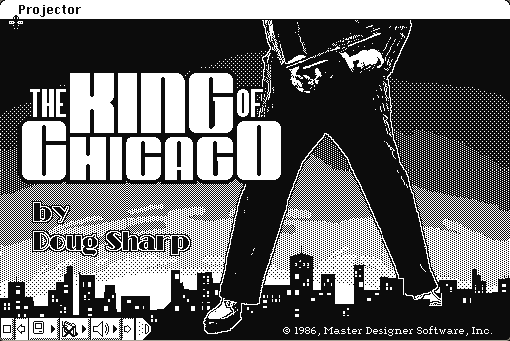
Hacker gives you a login prompt and nothing else — no manual, no objective, no hint of what the game is — and the discovery of what you are supposed to be doing is the game. Alter Ego is a life simulation told as a branching sequence of choices from birth onwards. The King of Chicago is one of Cinemaware's interactive films, and asks you to choose what your character thinks rather than what he does. Murder by the Dozen is twelve self-contained cases, closer to a puzzle book than to a story.
Playing them now
Text adventures run on the smallest machine here, a Macintosh Plus, and start in about a second. You will want a real keyboard: typing is the whole interface. Save often: the emulated machine keeps its disk between visits on titles that support it, but a parser game will still happily let you walk into a situation there is no way out of, and the only cure is an earlier save.
If you have never played one, the conventions are few. Type short commands — look, take lamp, north, examine desk. Abbreviations work: n for north, i for inventory, l to look again. The game understands far fewer words than English has, and part of the skill is learning which ones. When stuck, examine everything twice.
Play now
-
 Hacker NEW▶ Play free
-
 Tass Times in Tonetown NEW▶ Play free
-
 The Hitchhiker's Guide to the Galaxy NEW▶ Play free
-
 Deadline NEW▶ Play free
-
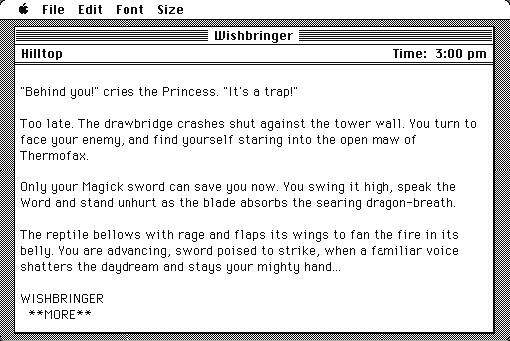 Wishbringer NEW▶ Play free
-
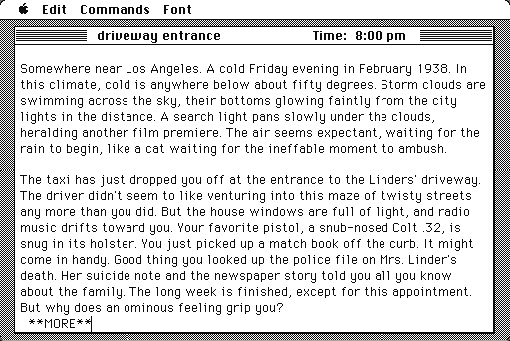 The Witness NEW▶ Play free
-
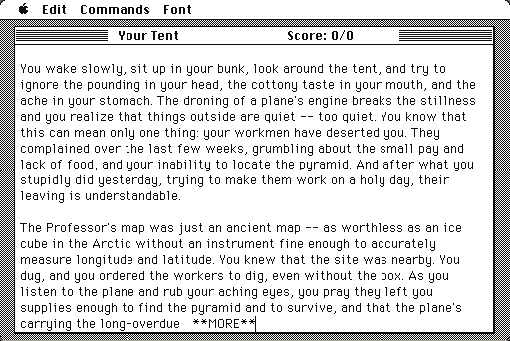 Infidel NEW▶ Play free
-
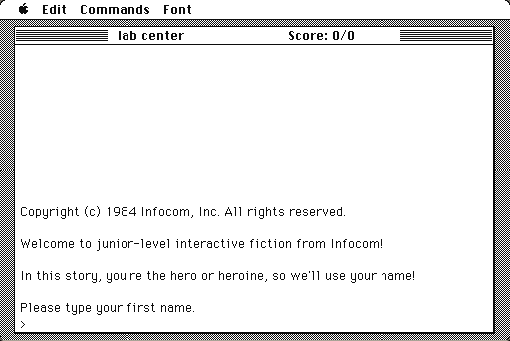 Seastalker NEW▶ Play free
-
 Suspect NEW▶ Play free
-
 Cutthroats NEW▶ Play free
-
 Alter Ego NEW▶ Play free
-
 Borrowed Time NEW▶ Play free
-
 Mindshadow NEW▶ Play free
-
 Star Trek: The Kobayashi Alternative NEW▶ Play free
-
 Dragonworld NEW▶ Play free
-
 The Crimson Crown NEW▶ Play free
-
 Murder by the Dozen NEW▶ Play free
-
 The King of Chicago NEW▶ Play free