System 6
A Macintosh Plus is eight megahertz, one megabyte of memory as standard, and a nine-inch screen showing 512 by 342 pixels in pure black and white. No greys. No colour. No hard disk unless you bought one separately. It is, by any modern measure, a rounding error of a computer.
It is also the machine that convinced people a graphical interface was worth having, and the software written for it is unusually good, because the constraints left no room for anything that was not.
Why System 6 software still feels fast
Partly because it is: emulating an eight-megahertz 68000 in WebAssembly costs a modern processor almost nothing, which is why these are the only titles on this site genuinely comfortable on a phone. The whole machine starts in about a second.
But mostly because of how it was written. There was no memory to waste and no processor headroom to hide behind, so a program did what you asked immediately or it did not ship. MacPaint responds to the mouse with no perceptible delay on hardware that would struggle to decode a modern JPEG. That is a design achievement, not a hardware one, and it survives emulation intact.
The black and white is the aesthetic
One bit per pixel means no anti-aliasing, no gradients and no soft edges — so the entire visual language of the era is built from dithering. Fifty-odd fill patterns that read as shades of grey from a normal viewing distance and resolve into checkerboards up close. Icons drawn pixel by pixel. Susan Kare's typefaces, designed as bitmaps at specific sizes rather than scaled from outlines.
It has aged far better than the colour era that followed. A 1987 Macintosh screen looks deliberate. A 1995 one, with its 256-colour gradients and beveled everything, mostly looks like 1995.
What ran on it
MacPaint and MacWrite shipped with the machine. HyperCard arrived in 1987 and was given away free, which produced a decade of software written by people who did not consider themselves programmers. Games were small, sharp and often shareware: Dark Castle, Shufflepuck Café, Crystal Quest, Glider, Continuum, Lode Runner. Kid Pix came in 1989 and was black and white for exactly this reason.
The strict limits also mean that a program written for a Mac Plus will often refuse to run under Mac OS 9, while the reverse is never true. If something here will not start on a later machine, the screen depth is usually why: code that assumes one bit per pixel does not survive contact with colour.
How it runs here
Mini vMac, compiled to WebAssembly. It emulates the compact Macs precisely and is small enough that startup is close to instant. The screen size is fixed by the hardware rather than a setting — ask for 800 by 600 and you get 512 by 342, because that is what a Macintosh Plus had.
The system software is System 6.0.8, the last and most stable of the line. If you want to run your own copy of something from this era, the loader takes disk images and archives and opens them on an emulated Mac.
Play now
-
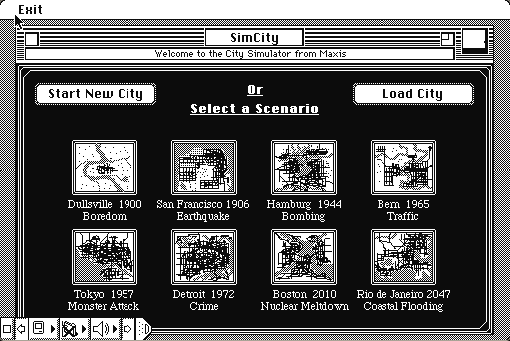 SimCity NEW▶ Play free
-
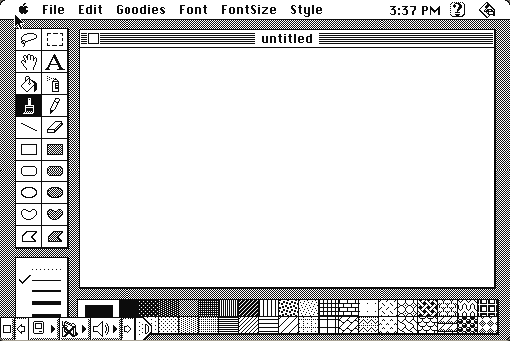 MacPaint NEW▶ Play free
-
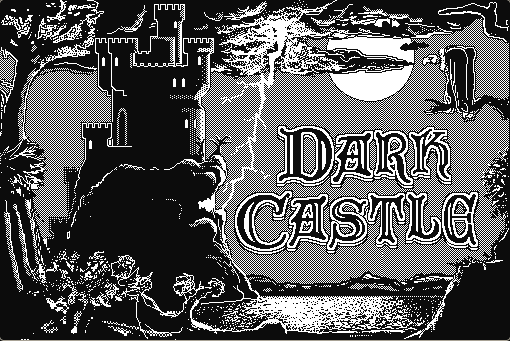 Dark Castle NEW▶ Play free
-
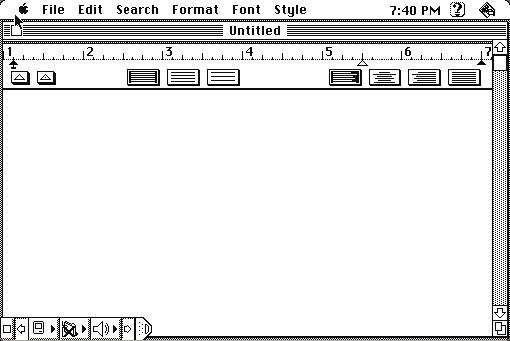 MacWrite NEW▶ Play free
-
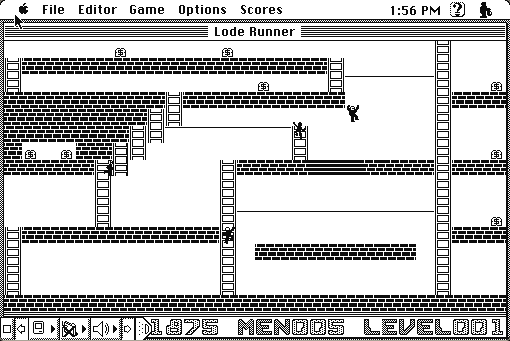 Lode Runner NEW▶ Play free
-
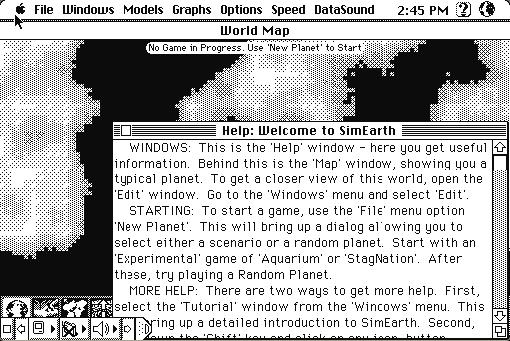 SimEarth NEW▶ Play free
-
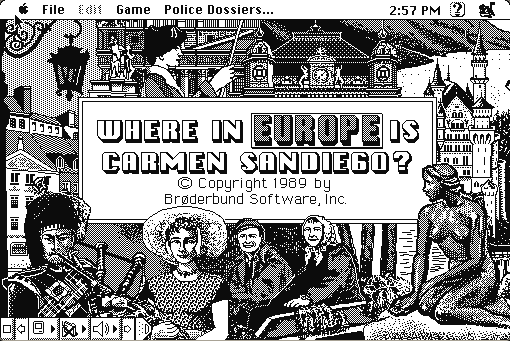 Where in Europe Is Carmen Sandiego? NEW▶ Play free
-
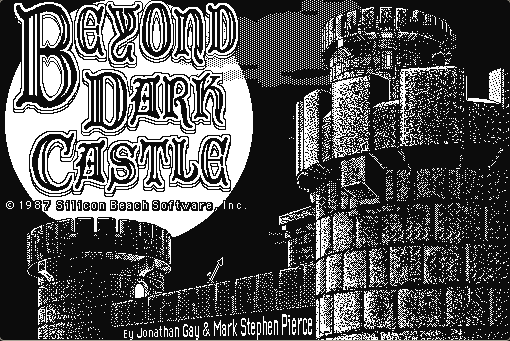 Beyond Dark Castle NEW▶ Play free
-
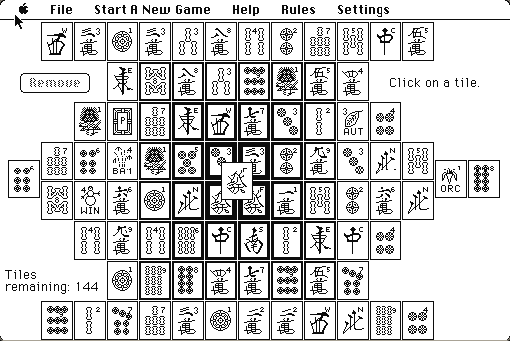 Shanghai NEW▶ Play free
-
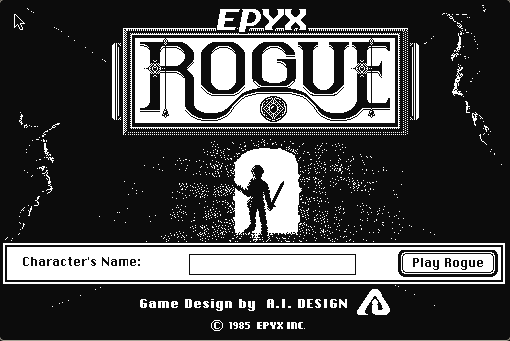 Rogue NEW▶ Play free
-
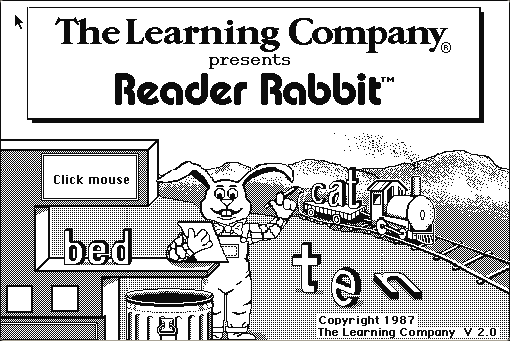 Reader Rabbit NEW▶ Play free
-
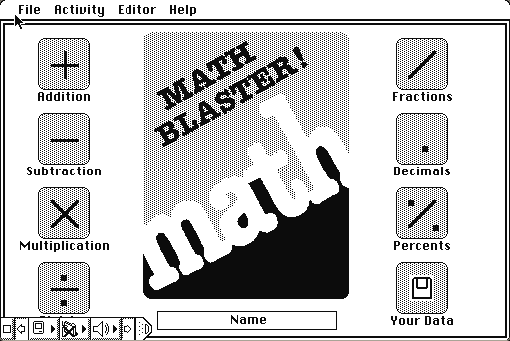 Math Blaster NEW▶ Play free
-
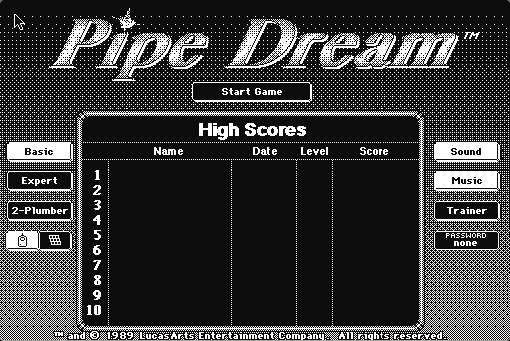 Pipe Dream NEW▶ Play free
Guides
- Kid Pix 1989 · Craig Hickman
- Glider 4.0 1991 · John Calhoun