System 7
System 7 shipped in May 1991 and ran, in one revision or another, until 1997. If you used a Macintosh and remember it, this is almost certainly what you remember: colour icons, the Apple menu you could put your own things in, aliases, balloon help, and a Finder that could copy files while you did something else.
What System 7 actually changed
It was the first fully 32-bit-clean system, which sounds like an implementation note and was in fact the thing that let a Macintosh address more than eight megabytes of memory. MultiFinder stopped being optional, so running two programs at once became normal rather than a setting you enabled.
Three smaller additions mattered more day to day. Aliases — a file that points at another file, which the system tracks even if you move the original. The customisable Apple menu, which was a folder, so anything you dropped into it appeared in the menu. And drag and drop between applications, which is so ordinary now that its absence is hard to imagine.
The System Folder was also reorganised into Extensions, Control Panels and Preferences, which is the reason anyone who used a Mac in the 1990s knows the phrase "extension conflict". Holding Shift at startup to disable them all was standard troubleshooting.
The era this covers
The shareware boom, the CD-ROM boom, and the school computer lab. Info-Mac and the University of Michigan archive. Games that came on floppies and games that came on discs with full-motion video. The Oregon Trail in colour. Marathon. Myst. Kid Pix 2. After Dark's flying toasters, which were an extension, which is why they only exist inside a running System 7.
It is also where nearly everything on this site lives. System 7 ran for six years across an enormous range of hardware, so most Macintosh software of any consequence targets it.
How it runs here
Basilisk II, compiled to WebAssembly, emulating a 68k Macintosh with System 7.5.3 — the free update Apple released in 1996 and the most widely compatible version of the line. 640 by 480 in 256 colours, which is what most software of the period expects.
The specific machine is a Macintosh IIfx rather than the faster Quadra, for an unglamorous reason: with the Quadra's ROM this particular System 7.5 install reads a few kilobytes, decides nothing is bootable, and stops on a black screen with no error at all. The IIfx boots it in full. Emulation is like that sometimes.
Basilisk II also shares a folder with the browser, which appears on the desktop as "The Outside World" — that is where a file you drop into the loader arrives.
Play now
-
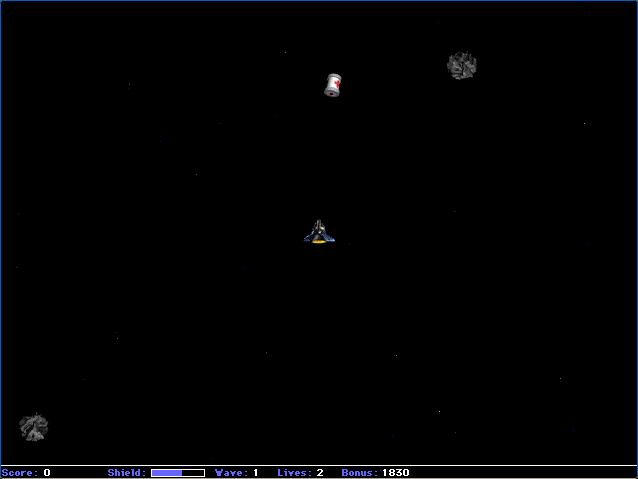 Maelstrom NEW FREE▶ Play free
-
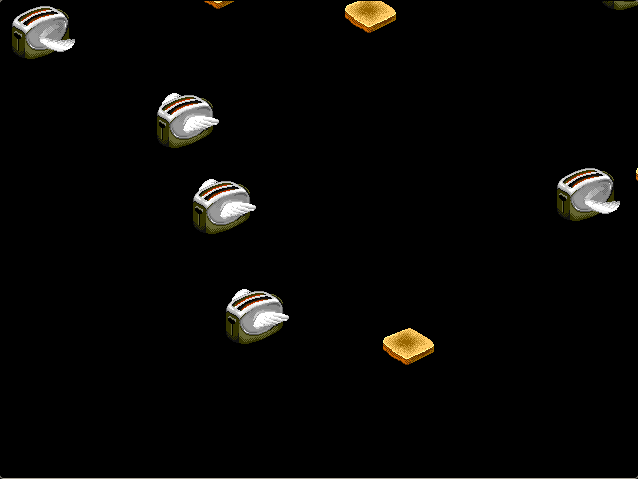 After Dark NEW▶ Play free
-
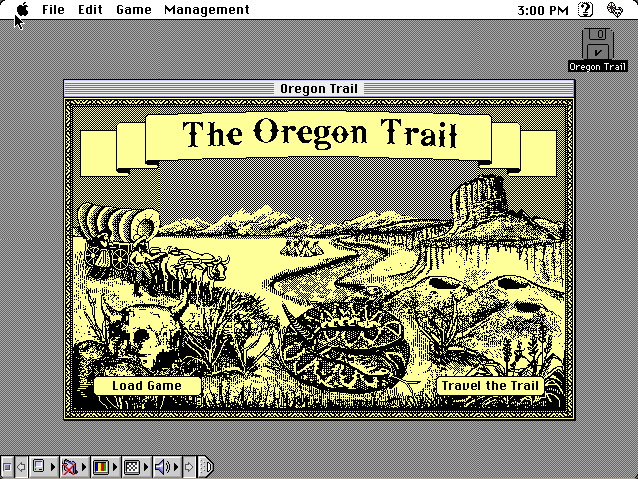 The Oregon Trail NEW▶ Play free
-
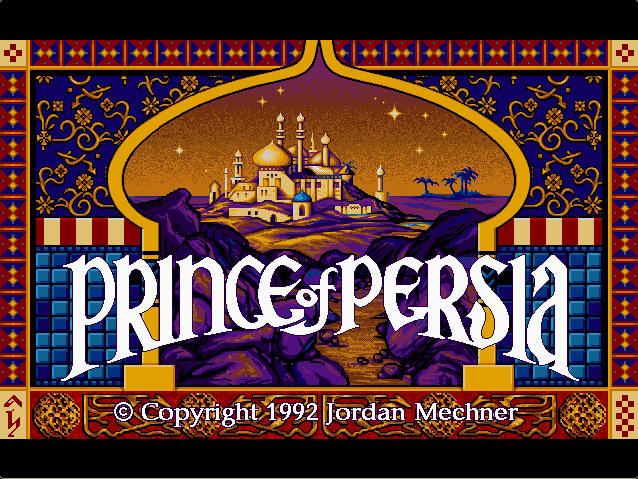 Prince of Persia NEW▶ Play free
-
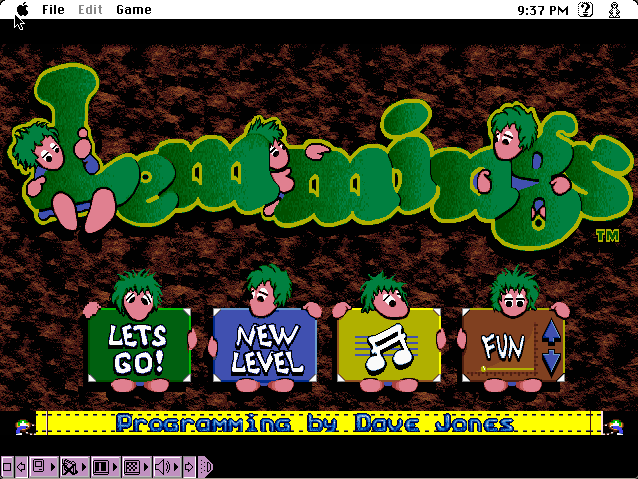 Lemmings NEW▶ Play free
-
 Arashi NEW FREE▶ Play free
-
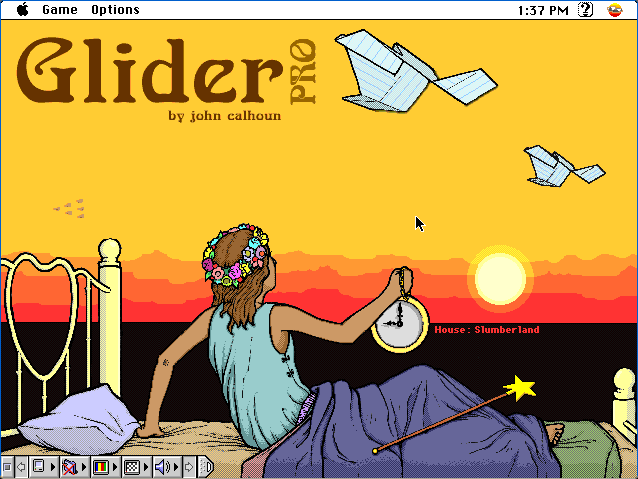 Glider PRO NEW FREE▶ Play free
-
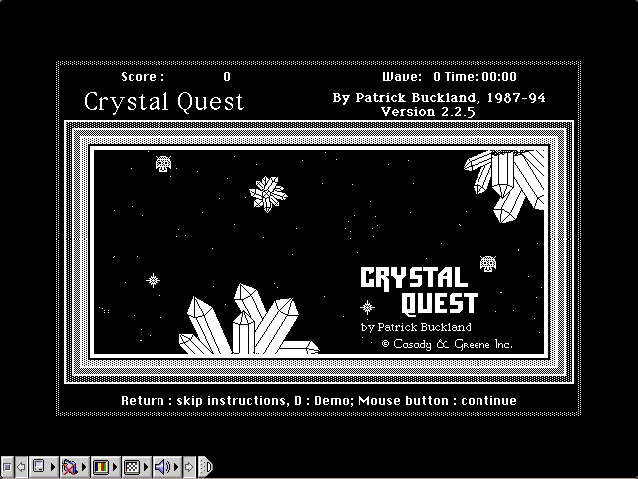 Crystal Quest NEW▶ Play free
-
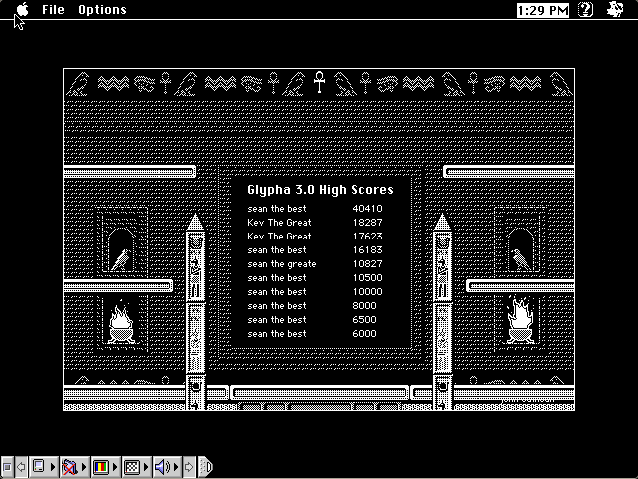 Glypha NEW FREE▶ Play free
-
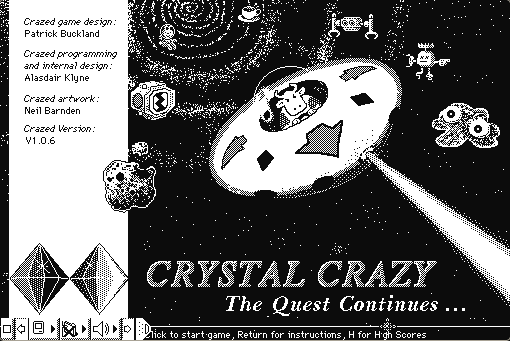 Crystal Crazy NEW▶ Play free
-
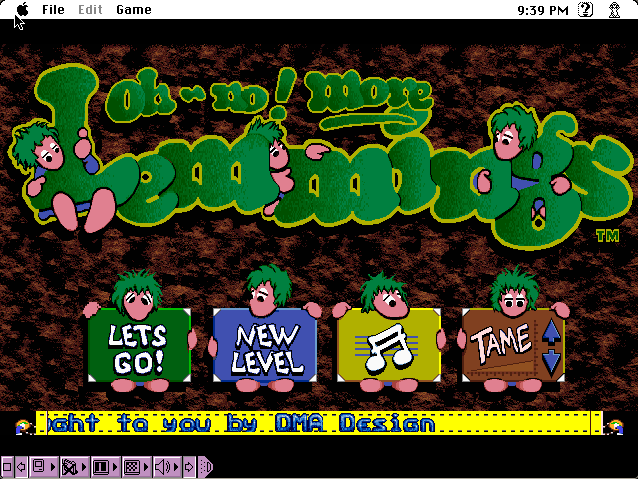 Oh No! More Lemmings NEW▶ Play free
-
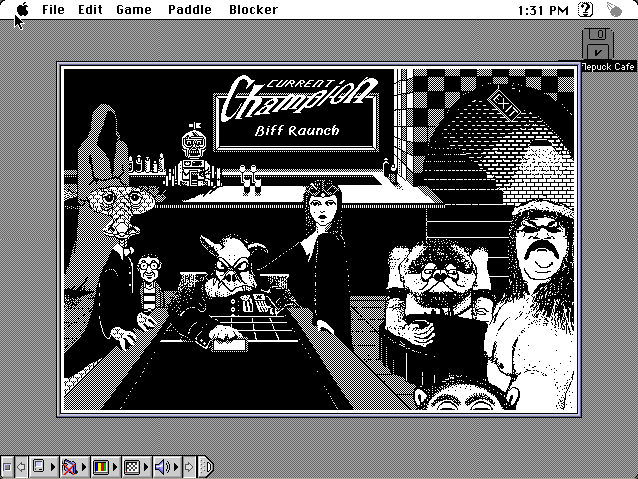 Shufflepuck Café NEW▶ Play free
-
 Super Munchers NEW▶ Play free
Guides
- Marathon 1994 · Bungie Software
- Marathon Infinity 1996 · Bungie Software
- Number Munchers 1990 · MECC